A Report on 2026 Annual Directors' Conclave & 36th IOD Annual Day

On August 22, 2026, nearly 400 board members, regulators, and business leaders gathered at Hotel Le- Méridien, New Delhi, for the Institute of Directors (IOD) flagship Annual Directors' Conclave & 36th IOD Annual Day.
Across several plenary sessions, the deliberations moved fluently from capital markets and ESG to AI governance, gender diversity, and regulatory intensification punctuated by two MoU signings, A Handbook release, and a joint research report inauguration. The theme of the Conclave, 'Making Boards More Effective for Investor Confidence & Sustainable Value Creation' was discussed in details.
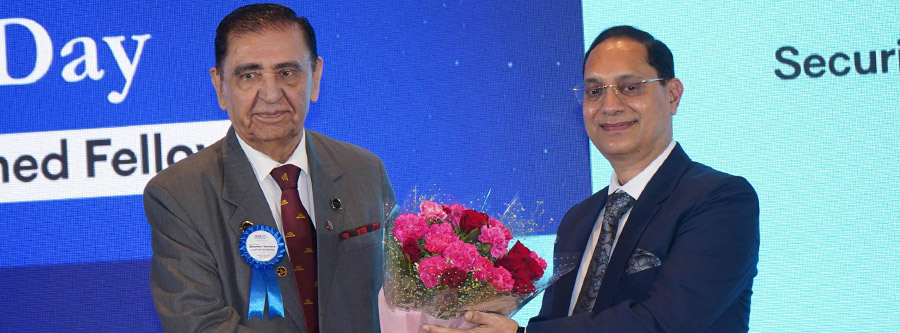
The evening concluded with the felicitation of the IOD Distinguished Fellows 2026 honouring leadership measured not in tenure but in institutions built by them. Although unable to attend in person, the Hon'ble Defence Minister of India shared a recorded video message for the occasion, acknowledging IOD's contribution towards strengthening boardroom standards and fostering ethical, transparent and accountable leadership.
What follows is less a record of deliberations than a portrait of a boardroom rethinking itself in real time.
PLENARY SESSION – I
INAUGURAL SESSION
The Conclave commenced with a 'Welcome Address' delivered by:
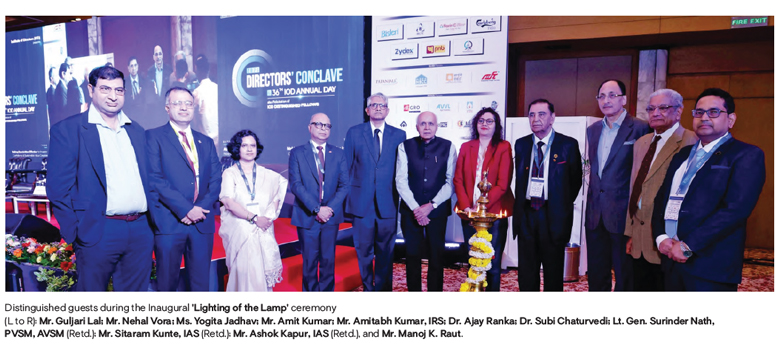
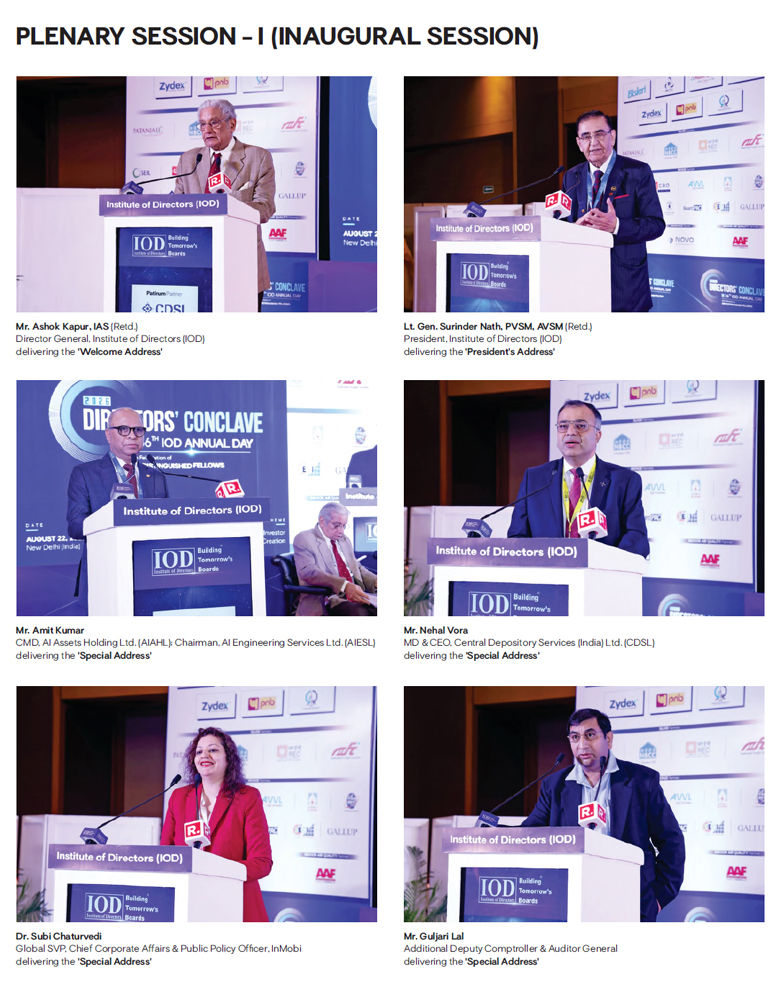
Mr. Ashok Kapur, IAS (Retd.)
Director General
Institute of Directors (IOD)
Mr. Kapur observed that the Conclave was being convened at a time when the role of business in society is being scrutinised more closely than ever before, with organisations increasingly judged not only by how they serve their shareholders and stakeholders, but also by the wider value ecosystem they create for society. It was emphasised by him that Corporate Governance has consequently evolved beyond compliance to encompass the quality of leadership, decision making and the manner in which responsibility is exercised. Responsible leadership, he noted, requires boards to navigate the delicate balance between performance and prudence, growth and responsibility, and opportunity and risk. Sustainability, he added, is now intrinsic to this mandate. Referring to the Companies Act, 2013, he highlighted that in its pioneering recognition of the board's responsibility towards environmental protection, was recognised alongside independent judgement, transparency and ethical governance. For IOD, however, Good Governance ultimately rests on a deeper foundation of Trust. A director's stewardship rule therefore extends beyond mitigating risk to safeguarding institutional credibility, reputation and long-term purpose. Quoting Peter Drucker, whom he described as the Shakespeare of Modern Management, he concluded, “Where everyone thinks alike, no one thinks very much.”
The 'President's Address' was delivered by:
Lt. Gen. Surinder Nath, PVSM, AVSM (Retd.)
President
Institute of Directors (IOD)
Gen. Nath observed that the annual gathering has evolved into a distinguished platform for advancing dialogue on good Corporate Governance, Board Leadership and Responsible Business. He noted that Climate Change is increasingly influencing business strategy and capital allocation, while sophisticated cyber threats, technological disruption and evolving stakeholder expectations continue to reshape the governance landscape. Against this backdrop, he emphasised that boards can no longer function merely as mechanisms for regulatory oversight or financial approvals. An effective board must challenge assumptions, anticipate emerging risks, encourage innovation while exercising prudent oversight, foster accountability and ensure that strategic decisions strengthen the organisation's long-term resilience and sustainability. Gen. Nath further underscored the importance of governing human capital, observing that while technology can accelerate transformation, leadership ultimately determines whether that transformation succeeds in real terms. He highlighted the indispensable role of independent directors, whose objectivity, expertise and independent judgement reinforce board effectiveness and investor confidence.
The session was enriched by a 'Special Address' from:
Mr. Amit Kumar
CMD, AI Assets Holding Ltd. (AIAHL)
Chairman, AI Engineering Services Ltd. (AIESL)
Mr. Kumar described trust as one of an organisation's most consequential assets, placing the board at the centre of its stewardship through strategic direction, oversight and accountability. He identified transparency, predictability and integrity as the foundations of investor confidence, while emphasising that contemporary boards must look beyond financial performance to a broader spectrum of strategic risks, including cybersecurity, technological disruption, geopolitics, climate change, supply chain vulnerabilities, data protection, talent and reputation. He advocated a more expansive understanding of board diversity, encompassing not merely physical representation but diversity of experience, geography and thought, enabling directors to challenge assumptions and enrich strategic thinking. Drawing on his experience with AIESL, Mr. Kumar demonstrated how long-term vision, empowered decision making and technology led operations can strengthen institutional resilience. He concluded that India's aviation transformation will require a judicious combination of ambition, safety, innovation, technology and accountability, underpinned above all by Trust.
This was followed by a 'Special Address' by:
Mr. Nehal Vora
MD & CEO
Central Depository Services (India) Ltd. (CDSL)
Mr. Vora reflected on Daniel Kahneman's book, 'Thinking, Fast and Slow'; drawing a compelling parallel between human cognition and boardroom decision-making. He explained that fast thinking enables intuitive, timely responses to urgent situations, while slow thinking calls for deliberation on consequential matters such as acquisitions, strategic shifts and new policies. He proposed that effective boards must distinguish between situations requiring speed and those demanding considered judgement. His framework for FAST: Foresight, Accountability, Speed with Discipline and Transparency underscores the need to act decisively without compromising rigour or trust. Conversely, slow thinking requires stewardship, diverse perspectives and a long-term orientation towards value creation. Mr. Vora stressed that cyber defence, in particular, must evolve from an IT concern into a boardroom priority. Ultimately, he argued, real value lies in building a trusted, transparent and sustainable organisation. Effective boards, he concluded, are those that combine agility with deliberation, accountability with stewardship, and short-term responsiveness with long-term value creation.
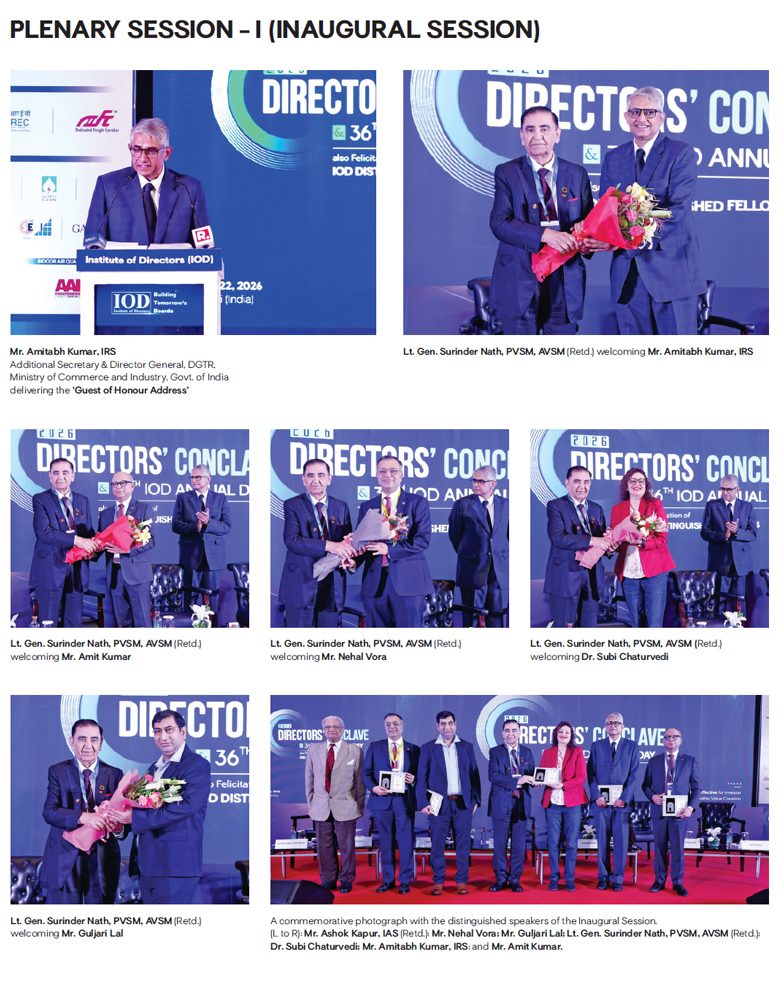
This was followed by a 'Special Address' by:
Dr. Subi Chaturvedi
Global SVP, Chief Corporate Affairs & Public Policy Officer
InMobi
Dr. Chaturvedi emphasised that meaningful board diversity must extend beyond representation to encompass meaningful inclusion, independent thinking and a plurality of perspectives. She stressed that independent directors must be given adequate information, time and autonomy to contribute effectively, rather than being appointed merely to fulfil a legal requirement. In an increasingly digital economy, she urged boards to treat cybersecurity, transparency, accountability and ethics as core governance priorities, rather than matters of compliance. Reflecting on her work with emerging technologies and MSMEs, Dr. Chaturvedi advocated wider adoption of cybersecurity standards, responsible Artificial Intelligence and digital upskilling. She also called for greater emphasis on financial transparency, future-ready talent and building the 'Brand India' narrative. She concluded by underscoring the responsibility of leaders to create value not only for shareholders, but also for the larger society and the nation.
This was followed by a 'Special Address' by:
Mr. Guljari Lal
Additional Deputy Comptroller & Auditor General
Mr. Lal underscored that India's accelerating capital-market growth, coupled with rising domestic and global investor participation, places a heightened responsibility on boards to safeguard trust. As household savings increasingly move towards market investments, the quality of corporate governance becomes as consequential as financial performance. He described boards as the core custodians of this trust, emphasising that their role extends beyond fiduciary oversight. Independent directors and board committees, he noted, are therefore central to effective checks and balances, while robust and independent audit remains critical to the credibility of financial reporting. Drawing on the public-sector landscape, he highlighted continuing gaps in board composition, independent director representation, financial reporting and governance practices, particularly among state public sector enterprises. These shortcomings, he observed, demonstrate that governance quality is ultimately reflected in institutional performance. Looking ahead, he urged boards to treat data sovereignty as a strategic governance concern, recognising critical data as a national resource requiring clear oversight of custody, location, access and protection.
This was followed by the 'Guest of Honour Address' delivered by:
Mr. Amitabh Kumar, IRS
Additional Secretary & Director General, DGTR
Ministry of Commerce and Industry, Govt. of India
Mr. Kumar highlighted that effective boards now sit at the intersection of corporate governance, investment strategy and international trade, with sustainability playing a growing role in market access and investor confidence. He added that investors are now evaluating not only financial performance, but also how companies identify, manage and disclose environmental and social risks. He emphasised that emerging trade regulations, including the EU's Carbon Border Adjustment Mechanism (CBAM) and Digital Product Passport requirements, are making credible sustainability and supply chain data increasingly critical to global competitiveness. For boards, this necessitates stronger oversight of emissions measurement, reporting and verification, supplier data, transition planning and technological preparedness. Mr. Kumar underscored the importance of embedding Sustainability risks within 'enterprise risk management' and aligning ESG considerations with capital allocation. India's evolving trade ecosystem, including dedicated Trade and Sustainable Development chapters, reflect a calibrated approach that seeks to reconcile environmental objectives with developmental priorities. He concluded that India's strategic imperative is not to choose between growth and sustainability, but to pursue sustainable, inclusive and globally competitive growth.
PLENARY SESSION – II
FIRESIDE CHAT
Topic: Making Boards More Effective for Investor Confidence & Sustainable Value Creation
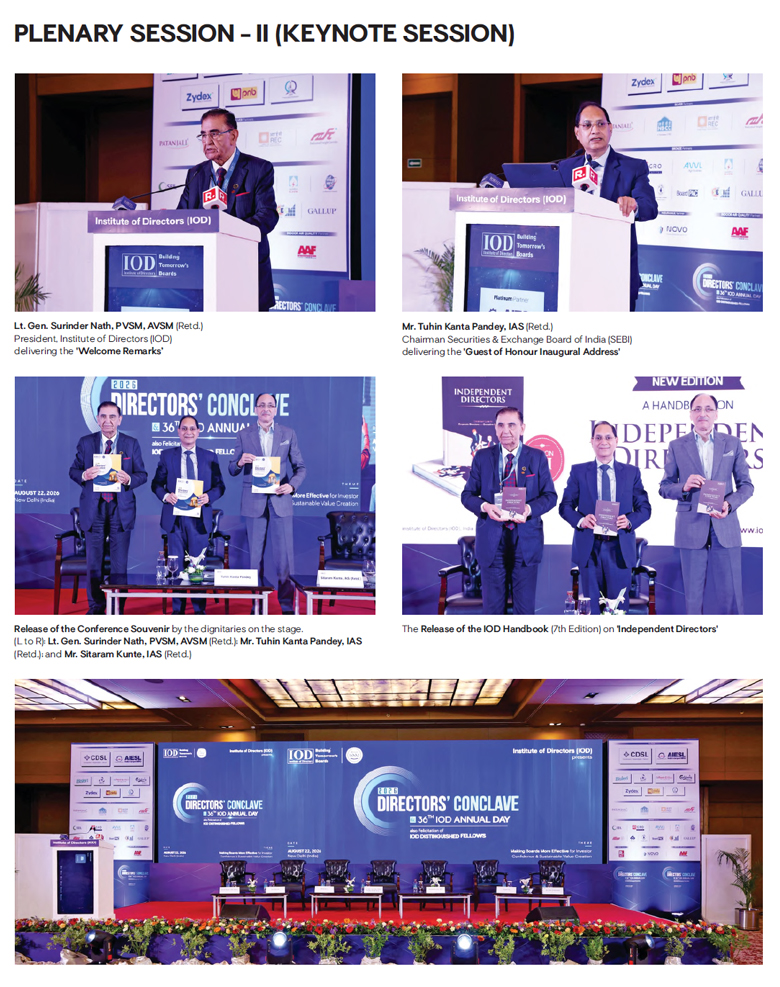
The 'Welcome Remarks' were delivered by:
Lt. Gen. Surinder Nath, PVSM, AVSM (Retd.)
President
Institute of Directors (IOD)
Gen. Nath introduced Mr. Tuhin Kanta Pandey, IAS (Retd.) recalling his association with the IOD since the last two years, he highlighted Mr. Pandey's distinguished career and his significant contributions to economic and financial policy, public asset management, industrial development, taxation, institutional reforms and governance. Gen. Nath further noted that it was an honour for the IOD to welcome such a distinguished public servant once again and expressed his appreciation for Mr. Pandey's continued guidance to the Institute.
The 'Guest of Honour Address' was delivered by:
Mr. Tuhin Kanta Pandey, IAS (Retd.)
Chairman
Securities & Exchange Board of India (SEBI)
Mr. Pandey emphasised that this IOD forum places the quality of Governance at the centre of its work, and that the IOD has an important role in keeping this conversation alive, not merely by discussing governance principles, but by fostering informed questioning and forward-looking dialogue in the boardroom. He identified trust as the most important asset and posed a fundamental question: Whether governance practices are keeping pace with the growing complexity of modern enterprises or not? He distinguished between compliance and stewardship, observing that while compliance asks, “What does the rule require me to do?”, stewardship asks, “What is the responsible thing to do?” Mr. Pandey further underscored the pivotal role of independent directors in questioning, bringing an independent perspective and seeking solutions. The quality of board decisions, he observed, cannot exceed the quality of information available to the board. He further proposed a capacity-building network involving SEBI, NISM, professional and academic institutions, industry associations and partners such as IOD to strengthen the capabilities of independent directors on a scale and with quality rating.
This was followed by a Fireside Chat session by
Mr. Tuhin Kanta Pandey, IAS (Retd.)
Chairman
Securities & Exchange Board of India (SEBI)
&
Mr. Sitaram Kunte, IAS (Retd.)
Chairman – Western Region, Institute of Directors (IOD); former Chief Secretary of Maharashtra
This interactive session was followed by the following ceremonies:
1. Release of the Conclave Souvenir
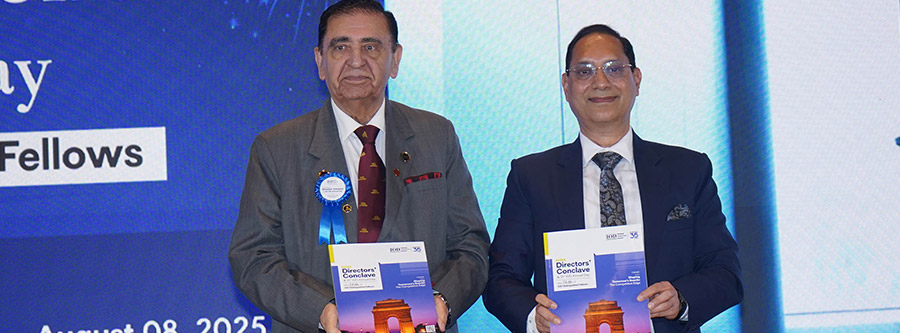
2. Release of the IOD Handbook on Independent Directors (Edition 7)
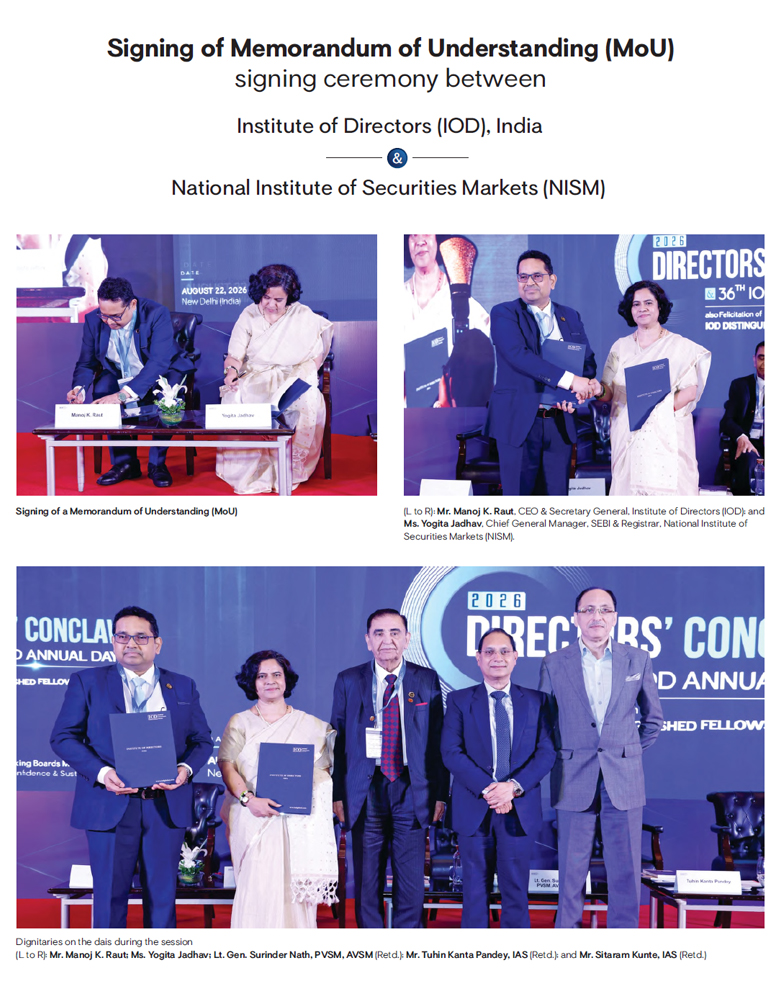
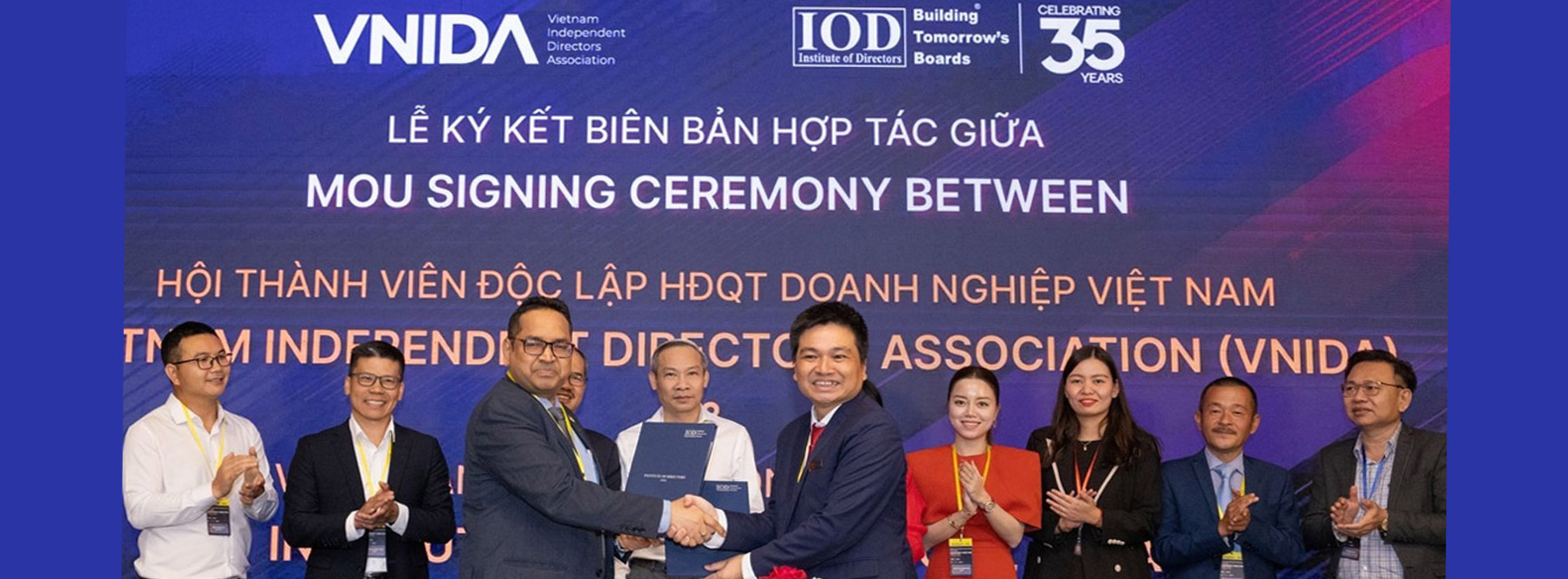
3. Signing of Memorandum of Understanding (MoU) between Institute of Directors (IOD), India, & National Institute of Securities Markets (NISM)
PLENARY SESSION – III
THE FUTURE-READY BOARD: CAPABILITY, CULTURE & SECTORAL FORESIGHT
The Session was chaired by:
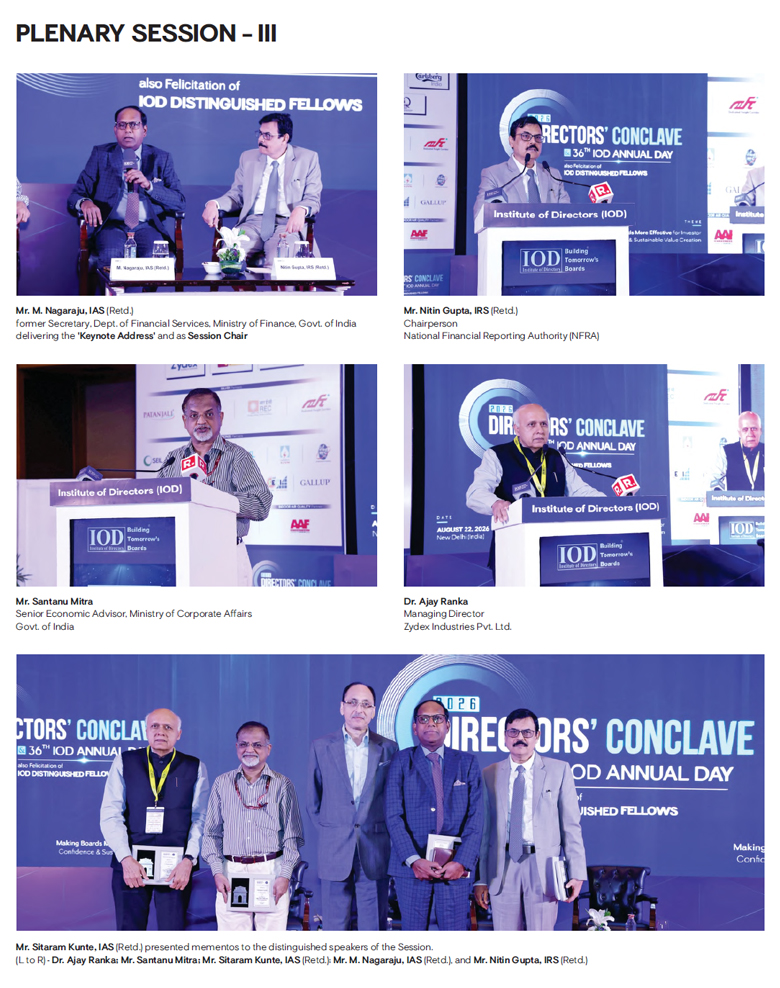
Mr. M. Nagaraju, IAS (Retd.)
former Secretary, Department of Financial Services Ministry of Finance, Govt. of India
Mr. Nagaraju invited the panellists to examine what constitutes an effective and efficient board and how such effectiveness can be strengthened in practice. He highlighted the particular challenges faced by promoter-led companies, where ownership interests may sometimes influence boardroom dynamics, and stressed the importance of ensuring that minority shareholders' interests remain adequately represented and protected. He emphasised that the board, as a collective body, must uphold its fiduciary responsibilities, exercise independent judgement and ensure that decision-making remains balanced and transparent. Mr. Nagaraju also highlighted the growing importance of ESG oversight, noting that several organisations have established dedicated ESG committees or sub-committees reporting directly to the board. Such structures, he observed, enable directors to maintain visibility over sustainability initiatives, monitor progress and ensure that ESG considerations are meaningfully integrated into business strategy and organisational decision-making.
The session consisted of the following Distinguished Speakers:
1. Mr. Nitin Gupta, IRS (Retd.)
Chairperson
National Financial Reporting Authority (NFRA)
2. Mr. Santanu Mitra
Senior Economic Advisor, Ministry of Corporate Affairs, Govt. of India
3. Dr. Ajay Ranka
Managing Director
Zydex Industries Pvt. Ltd., India
Mr. Gupta observed that a 'future-ready' board must be capable of anticipating risks and visualising potential surprises before they materialise. Drawing on his regulatory perspective, he noted that boards can no longer rely solely on the regulatory calendar, as geopolitics, technology, supply-chain disruptions and energy markets increasingly influence financial reporting. He identified AI as a defining frontier for board governance, urging directors to examine not only how technology is deployed, but also how it affects financial outcomes and board-level decision-making. While acknowledging the unprecedented capacity of technology to analyse and synthesise information, he cautioned against automation bias and stressed that human judgement and robust challenge must remain central. Mr. Gupta further highlighted the importance of organisational culture, particularly the courage and protection required to question decisions or information. Finally referring to the Wirecard case, he underscored how failures can persist when concerns raised internally are not adequately protected or acted upon.
Mr. Mitra explored what the board of 2035 might look like in an age of AI, arguing that the central question would no longer be what AI can accomplish, but what remains uniquely human. Drawing on the Austrian School of Economics, particularly the ideas of Friedrich Hayek and Israel Kirzner, he highlighted the enduring importance of dispersed knowledge, entrepreneurial alertness and purposeful human action. He cautioned against the 'tyranny of the statistical', noting that AI may become an extraordinary forecasting tool, but tomorrow cannot simply be treated as a statistical extension of yesterday. Prediction, he stressed, is not judgement; machines can process information and optimise defined objectives, but directors must determine those objectives and assume responsibility for their consequences. Mr. Mitra argued that as AI reduces the need for routine analysis and information gathering, the board's most valuable capabilities will increasingly be judgement, imagination, entrepreneurial insight, responsibility, wisdom and empathy.
Dr. Ranka presented his perspective on boardroom leadership through three guiding principles: Prosperity, People and Protection. He argued that directors must assess their organisations against the larger economic opportunity, while ensuring that prosperity translates into better workplaces and greater value for employees and society. He urged boards to cultivate a culture of hard work, excellence and global ambition, while protecting organisational culture and preserving India's distinctive values. He further identified three critical capabilities for preparing companies for the future: curiosity; critical thinking & creativity; and innovation complemented by compassion and sustainability. Dr. Ranka also encouraged boards to conduct regular 'why would we not exist?' exercises to anticipate threats and strengthen resilience. Looking ahead, he highlighted major trends in infrastructure, energy transition, automation, robotics, ai, nutrition and healthcare, urging Indian businesses to recognise the opportunities emerging from these shifts. He concluded by emphasising that excellence must remain the boardroom's guiding principle as India aspires to become a globally competitive and future-ready economy.
This was followed by an engaging interaction with the large audience.
PLENARY SESSION – IV
LEADERSHIP IN AN ERA OF REGULATORY INTENSIFICATION: GOVERNANCE, ACCOUNTABILITY & ORGANISATIONAL RESILIENCE
The Session was chaired by:
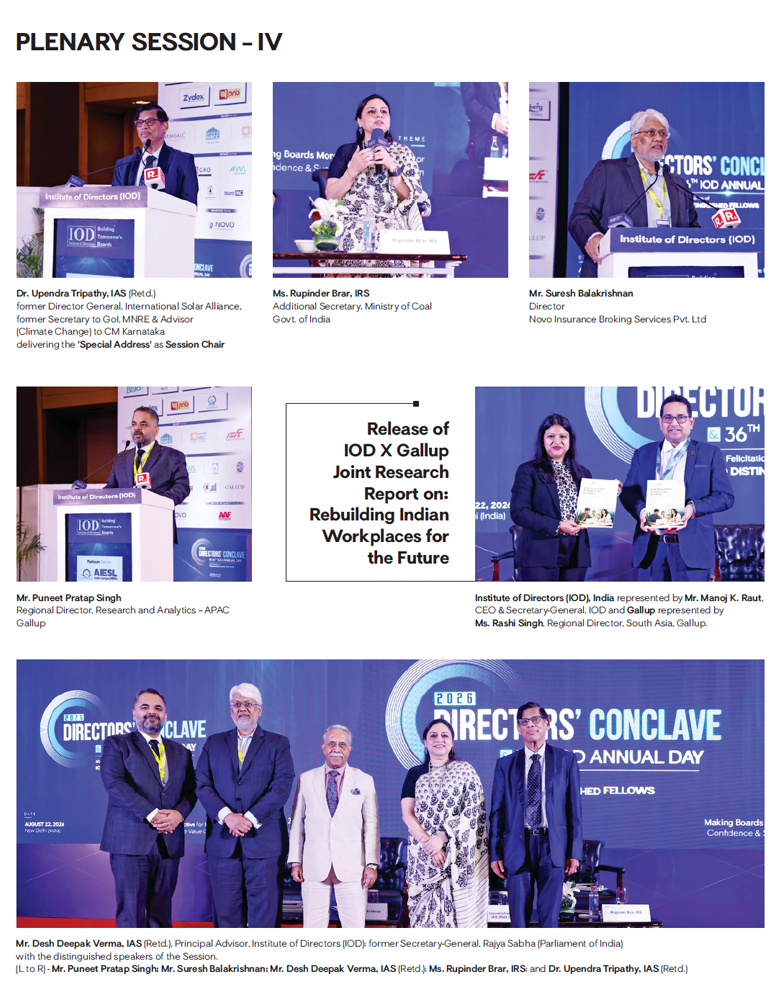
Dr. Upendra Tripathy, IAS (Retd.)
former Director General, International Solar Alliance, former Secretary to GoI, MNRE,
Advisor (Climate Change) to CM Karnataka
Dr. Tripathy contextualised the session by highlighting the importance of communication, using a '50/50' anecdote to illustrate how identical terminology can conceal fundamentally different perceptions. He linked this insight to boardroom governance, particularly stakeholder and minority shareholder expectations, where clarity and transparency are essential. He introduced the AII Framework of Actors, Institutions and Ideas, emphasising how these three dimensions are shaping contemporary governance. He further noted that boards and institutions must continuously adapt to emerging challenges, including ai, quantum technologies and cybersecurity, while educational institutions must prepare the next generation of directors and business leaders. Dr. Tripathy also drew attention to India's complex regulatory landscape, citing the extensive network of laws, rules, compliances, statutory filings and regulatory requirements confronting businesses and boards. He advocated developing a dynamic, time-series Index of Regulatory Intensity to capture how this burden evolves over time and concluded by underscoring the need for a more adaptive, technology-enabled and future-ready governance mechanisms.
The session consisted of the following Distinguished Speakers:
1. Ms. Rupinder Brar, IRS
Additional Secretary, Ministry of Coal
Govt. of India
2. Mr. Suresh Balakrishnan
Director
Novo Insurance Broking Services Pvt. Ltd.
3. Mr. Puneet Pratap Singh
Regional Director - Research and Analytics – APAC Gallup
Ms. Brar observed that India's coal sector has undergone significant transformation, moving beyond a historically monolithic and monopolistic structure towards greater competition, process reform and technology-led governance. Technology, she noted, has become a powerful enabler, allowing real-time oversight across hundreds of mines while strengthening monitoring of safety, accidents and operational risks. Yet, the greater challenge lies in translating governance principles from the boardroom to the last mile, particularly across geographically dispersed mining operations. She emphasised that effective governance requires more than regulatory awareness; it requires organisational ownership of why regulations matter which calls for sustained capacity building across boards, management and employees, supported by the benchmarking and dissemination of good practices across public and private operators. Growing investor interest in the sector, she observed, provides tangible evidence of improving confidence, while reinforcing the need to embed governance more deeply within the organisational culture.
Mr. Balakrishnan highlighted insurance and risk management as critical yet often overlooked pillars of effective corporate governance. He argued that insurance should be viewed not merely as a procurement function but also as contingency capital which is capable of protecting organisations, boards and independent directors when adverse events materialise. Boards, he observed, often receive qualitative assessments of risk but lack a clear understanding of their potential quantitative impact on the balance sheet. Risk quantification, therefore enables directors to determine appropriate mitigation measures and allocate capital more effectively. Mr. Balakrishnan stressed that robust implementation of enterprise risk management is as important as the framework itself, with independent oversight helping identify weaknesses before they escalate. He further underscored the need to protect independent directors' personal assets through appropriate insurance mechanisms. Ultimately, he advocated integrating risk assessment, quantification and protection into every major boardroom decision to ensure sustainable growth and organisational resilience.
Mr. Singh shifted the discussion of digital integration towards the human side of organisational resilience, emphasising that governance, regulation and technology can only translate boardroom strategy into performance through people. Using the analogy of a boat, he illustrated how engaged, disengaged and not engaged employees can either propel an organisation forward, work against its objectives or contribute only when closely supervised. Drawing on Gallup's workplace research and an IOD-led study involving 181 members and in-depth conversations with approximately 30 leaders, he highlighted the growing challenge of 'quiet quitting', driven largely by a disconnect between employee expectations and workplace experience. He stressed that managers are pivotal to engagement, while also facing significant declines in their own engagement. Mr. Singh advocated a leadership performance system centred on selecting managers for talent and role fit, equipping them with the right capabilities and creating cultures where strengths can flourish. He concluded with three priorities: select, equip and support great managers; place talent where it performs best; and bring organisational culture to life to create lasting stakeholder value.
This was followed by the:
Release of IOD X Gallup Joint Research Report on: Rebuilding Indian Workplaces for the Future.
The 'Special Remarks' were delivered by:
Ms. Rashi Singh
Regional Director, South Asia
Gallup
Ms. Singh emphasised that India's growth depends not only on capital, technology and policy, but also on how effectively organisations harness their people and capabilities. Reflecting on the IOD–Gallup report, 'Rebuilding Indian Workplaces for the Future,' she highlighted its central question: What must leaders do today to create a future-ready workplace tomorrow? She argued that the answer lies not in isolated programmes, but in building a strong leadership system by selecting capable managers, placing people in roles aligned with their strengths and making organisational culture tangible through clear goals, recognition, feedback and trust. She noted that while leaders cannot manage every workplace decision, their choices regarding leadership, priorities and culture fundamentally shape organisational performance. Ms. Singh reminded that India possesses the talent, ambition and opportunity required for sustained progress. The responsibility of leadership, she observed, is to bring these strengths together and translate them into lasting value.
This was followed by a Memorandum of Understanding (MoU) signing ceremony between:
Institute of Directors (IOD)
&
Federation of Indian Chambers of Commerce and Industry Ladies Organisation (FICCI FLO)
The 'Opening Remarks' were presented by:
Mr. Manoj K. Raut
CEO & Secretary-General
Institute of Directors (IOD)
Mr. Raut described the MoU-signing ceremony between the IOD & FICCI FLO as the beginning of a significant new chapter of collaboration, founded on a shared belief in the transformative role of women's leadership. He observed that when women lead, institutions become stronger, businesses become more resilient and societies progress. Reflecting on IOD's initiatives over the past several years, he highlighted its 'Master Class for Directors' programmes, through which hundreds of women professionals and entrepreneurs have gained boardroom knowledge, governance perspectives and the confidence to assume leadership positions. Looking ahead, Mr. Raut emphasised that future-ready boards will require diversity of thought, experience and leadership. He concluded with the thought that the IOD–FICCI FLO partnership will expand opportunities for boardroom education, mentorship and entrepreneurship, enabling women to progress from being just boardroom-ready to becoming influential and transformational leaders.
The 'Special Remarks' were presented by:
Ms. Puja Garg
National President
FICCI FLO
Ms. Garg emphasised that today's boards operate amid geopolitical uncertainty, climate risk, AI, cybersecurity and rapidly evolving business models, requiring directors to anticipate change, challenge assumptions and exercise foresight. She highlighted diversity as an essential to board effectiveness, not only as a symbolic requirement but for the breadth of experience, judgement and perspectives it brings to decision-making. While India has made progress in women's board representation, she identified the limited scope of women reaching senior leadership and C-suite positions as a continuing challenge. Ms. Garg outlined FICCI FLO's commitment to developing a stronger pathway from training and preparedness to boardroom participation. She noted that the organisation's partnership with IOD has already enabled women professionals to deepen their understanding of governance and board leadership. She described the MoU as a commitment to building a sustainable national pool of board-ready women who can shape decisions, strengthen accountability, anticipate risk and create long-term value.
PLENARY SESSION – V
THE ESG INFLECTION POINT: FROM REPORTING TO RESPONSIBILITY
The Session consisted of the following Distinguished Speakers:
1. Mr. Ajit Kumar Mishra
Director (Works)
IRCON International, Indian Railways
2. Mr. Shachindra Nath
Founder & Managing Director
UGRO Capital
3. Mr. Janmejaya Mahapatra
Chief Executive Officer
SEIL Energy India Limited
4. Mr. Rajneesh Bansal
Joint President - Procurement & Supply Chain
AWL Agri Business Limited
5. Mr. Sanjay Gupta
Head of Marketing
AI Engineering Services Ltd. (AIESL)
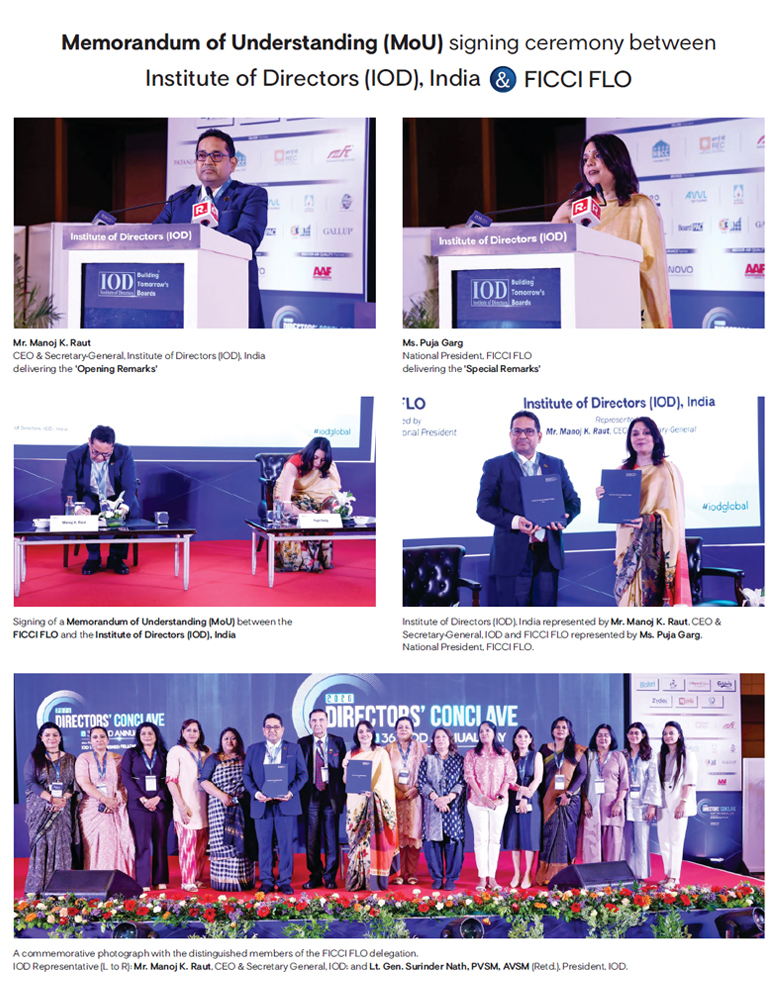
Mr. Mishra outlined five key drivers for embedding ESG into infrastructure projects. The first three being, ESG must progress from reporting to engineering, becoming an integral part of project design, procurement and execution rather than a standalone reporting exercise; Organisations should assess ESG decisions through lifecycle costs rather than assuming that sustainability necessarily increases expenditure; and Boards must move from compliance to capital allocation by dedicating resources and linking organisational incentives to ESG performance. He further advocated integrating ESG metrics into procurement and project-efficiency models, including carbon considerations, while emphasising that ESG extends beyond emissions to social outcomes and workforce welfare. He concluded by emphasising that boards should ultimately ask whether their organisations are genuinely making the world better through a more responsible business and efficient project delivery.
Mr. Nath focused on one key element of the ESG. He argued that the 'G' in ESG is not merely one element of the framework, but the precondition for delivering meaningful environmental and social outcomes. He observed that such outcomes are shaped by board-level decisions on capital allocation, procurement, incentives, pricing and long-term planning. He contended that governance must move beyond compliance and minority-shareholder protection towards its larger purpose which is to create, preserve and strengthen enduring enterprises. In the context of India's promoter-led companies, he questioned whether boards have developed sufficient institutional independence, particularly where promoters hold substantial voting power. Mr. Nath also challenged the conventional model of independent directorship, arguing that long-term stewardship requires directors to think beyond annual performance and engage deeply with strategy, succession, technology, sustainability and capital allocation. He proposed reconsidering long-term equity ownership for independent directors as a means of aligning stewardship with enduring value.
Mr. Mahapatra emphasised that ESG must evolve from a reporting exercise into a board-led framework for responsible decision-making. Drawing on his experience in the power sector, he argued that governance excellence should be measured not by the quality of reports, but by the quality of decisions taken when circumstances become difficult. He suggested three simple tests for whether ESG is truly part of governance: Does it influence where the board should invests? Does it shape the questions the board asks? And does it hold firm even when the business faces a difficult financial quarter?
Mr. Nath cautioned against both greenwashing and silence, advocating transparent recognition of environmental trade-offs while acknowledging the role of thermal power in supporting renewable integration. He stressed that the 'S' in ESG deserves equal attention, particularly when it comes to employee safety, wellbeing and maintaining trust within the wider community. Finally, he described governance as an operating system, urging boards to define non-negotiables, focus on material outcomes and take responsibility for decisions beyond compliance.
Mr. Bansal noted that ESG has moved from the margins of corporate strategy to the heart of business decision-making, evolving from a reporting requirement into a meaningful framework for responsible and sustainable value creation. Drawing on AWL's experience across agriculture, food processing, manufacturing and supply chains, he highlighted the importance of embedding sustainability across the entire value chain. He outlined initiatives spanning water conservation, renewable energy, resource efficiency, responsible sourcing, logistics and circular packaging, demonstrating how environmental responsibility can strengthen operational resilience. He noted that water stewardship, renewable power and improved resource efficiency are increasingly being treated as business-continuity and investment considerations rather than standalone sustainability projects. Mr. Bansal also highlighted the social dimension of sustainability, pointing to AWL's work in nutrition, healthcare, livelihoods and community development. He further emphasised that stronger rural communities ultimately foster to a healthier and more resilient business ecosystem.
Mr. Gupta drew on his experience in aviation Maintenance, Repair and Overhaul (MRO) sector, where sustainability is built into the business through the maintenance, restoration and extended life of aircraft, engines and components. He emphasised, however, that responsible practices must be balanced with economic viability and uncompromising safety standards. Drawing on his experience of leading an MRO facility through European aviation safety certification, he shared how meaningful ESG transformation begins not just with mere documentation, but by involving people. Rather than treating certification as an end in itself, he focused on employee safety, open communication, better working conditions, improved infrastructure and sound operational practices. This people-centred approach strengthened trust, motivation and productivity, while enhancing the facility's reputation and ultimately contributing to successful certification and business growth. Mr. Gupta stressed that every initiative must have clear ownership, accountability and implementation at the operational level. He argued that sustainable success emerges when responsible behaviour becomes embedded in everyday work practices, supported by ethical leadership and genuine concerns for people and concluded by stating that lasting ESG performance begins from the ground up, with responsibility translated into action.
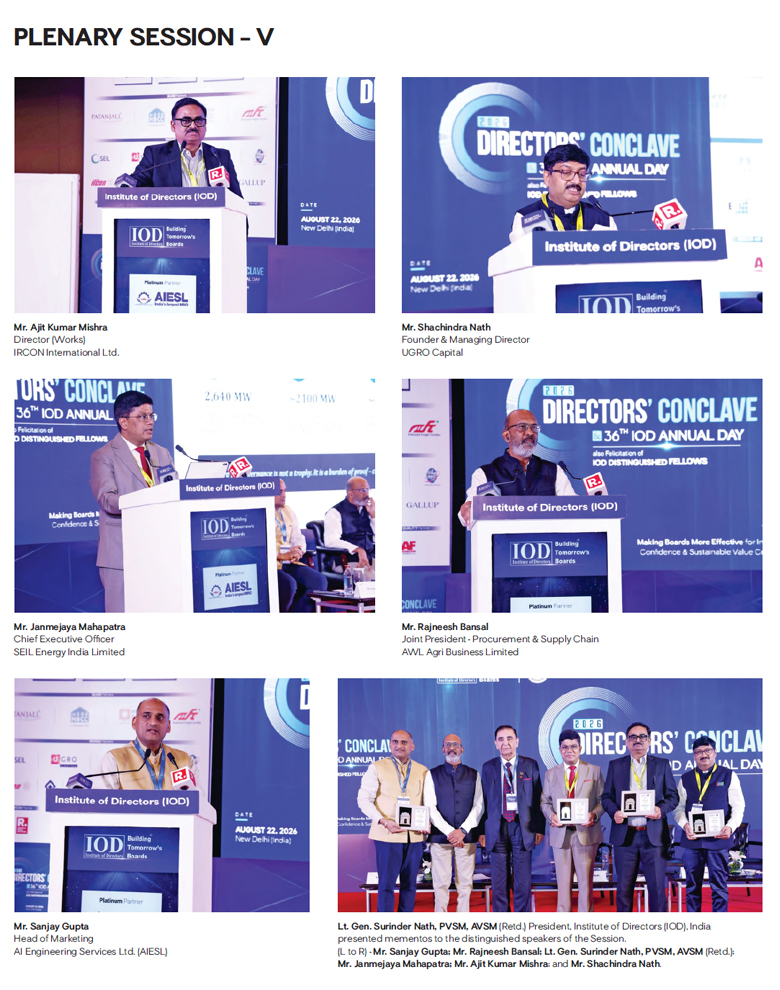
The session was followed by an engaging interaction with the large audience.
PLENARY SESSION – VI (A)
RESPONSIBLE GROWTH: GOVERNANCE, INNOVATION & SUSTAINABLE VALUE CREATION
The Session consisted of the following Distinguished Speakers:
1. Mr. Devesh Deval, IAS
Joint Secretary
Ministry of Food Processing Industries
Govt. of India
2. Dr. Suman Kumar Jha
Corporate Quality and Regulatory Head Patanjali Group of Companies
3. Mr. Shailesh Nigam
Chief Operating Officer - EEMEA, SAARC & CIS AAF International
4. Mr. Rishi Chawla
Vice President - Corporate Affairs
Carlsberg India Limited
Mr. Deval stated that responsible growth must extend beyond conventional economic measures to encompass sustainability, resilience and accountability towards society and the environment. He emphasised that businesses must consider resource efficiency, waste management, carbon emissions and the broader social impact of their operations, including the welfare of suppliers, logistics partners and other stakeholders across the entire value chain. Drawing on his experience in the food-processing sector, he highlighted the importance of converting India's agricultural strength into greater value addition, thereby benefiting farmers, entrepreneurs and the wider economy. He cited government initiatives in supporting micro-enterprises, which have helped grassroots entrepreneurs build businesses, create employment and increasingly connect with global markets. He noted that such models demonstrate how locally rooted enterprises can drive inclusive growth while contributing to more sustainable and environmentally responsible development. Mr. Deval also called for greater scientific awareness of the food-processing and packaged-food sector, urging closer collaboration between public and private sector industries to address misconceptions.
Mr. Jha emphasised that consumer trust in Ayurveda must be built through quality, transparency, scientific rigour and responsible business practices. Reflecting on the growing importance of intergenerational learning, he noted that staying relevant requires remaining open to new perspectives while drawing on the wisdom and experience gained over time. He highlighted the distinctive complexity of Ayurvedic products, which bring together traditional knowledge, natural ingredients and multi-herbal formulations. Unlike conventional pharmaceuticals, where individual molecules can often be precisely identified and measured, Ayurvedic formulations may contain hundreds of constituents. Consequently, testing a single marker compound may not fully represent the quality or therapeutic characteristics of the finished product. Mr. Jha stressed that analytical testing must therefore be complemented by robust raw-material authentication, supplier controls, process standardisation, advanced analytical techniques and strengthened research and development. He also advocated greater consumer transparency, including QR-code-enabled access to product information and testing details. While closing, he noted that consumer confidence is earned consistently, through authentic sourcing, rigorous manufacturing, scientific testing, transparent communication and an unwavering commitment to safety & public health.
Mr. Nigam drew attention particularly to indoor air quality as an often-overlooked aspect of responsible growth in the food and beverage industry. He noted that while manufacturers pay close attention to raw materials, processes, packaging and finished products, the quality of air within production environments also plays an important role in hygiene, contamination control, shelf-life and operational reliability. He emphasised that different applications, including dairy, brewing, baking, meat and poultry, beverages and ready-to-eat foods, require tailored approaches to humidity, temperature, particulate levels and microbial control. Air filtration, pressure management and ventilation should therefore be viewed as integral elements of the food-safety architecture rather than merely facilities-management decisions. Mr. Nigam further stressed the need to balance air quality with energy efficiency, noting that filtration systems can increase energy consumption and operating costs. He advocated moving from a capital-expenditure mindset towards lifecycle assessment encompassing energy, maintenance, downtime and product risk. He urged boards to bring air management into their broader sustainability and resilience thinking, stressing that responsible manufacturing is not just about producing more, but about protecting products, people and the planet through safer, smarter and more efficient operations.
Mr. Chawla stated that responsible growth, governance, innovation and sustainability can no longer be treated as separate corporate agendas, but must form an integrated strategy for long term value creation. Drawing on Carlsberg's nearly 180-year legacy, he highlighted how sustained relevance depends on continuously reinventing the business while remaining anchored in strong values and governance. He cited the Carlsberg Research Laboratory as an enduring example of innovation creating value beyond the enterprise, demonstrating how scientific advancement can generate wider societal impact. Governance, he argued, should be viewed not as a cost, but as a source of competitive advantage, with trust emerging as one of the organisation's most valuable assets. While concluding, he stressed on the point that responsible growth is ultimately the most sustainable path to profitable growth, achieved by integrating governance, innovation, sustainability and trust into a coherent long-term strategy.
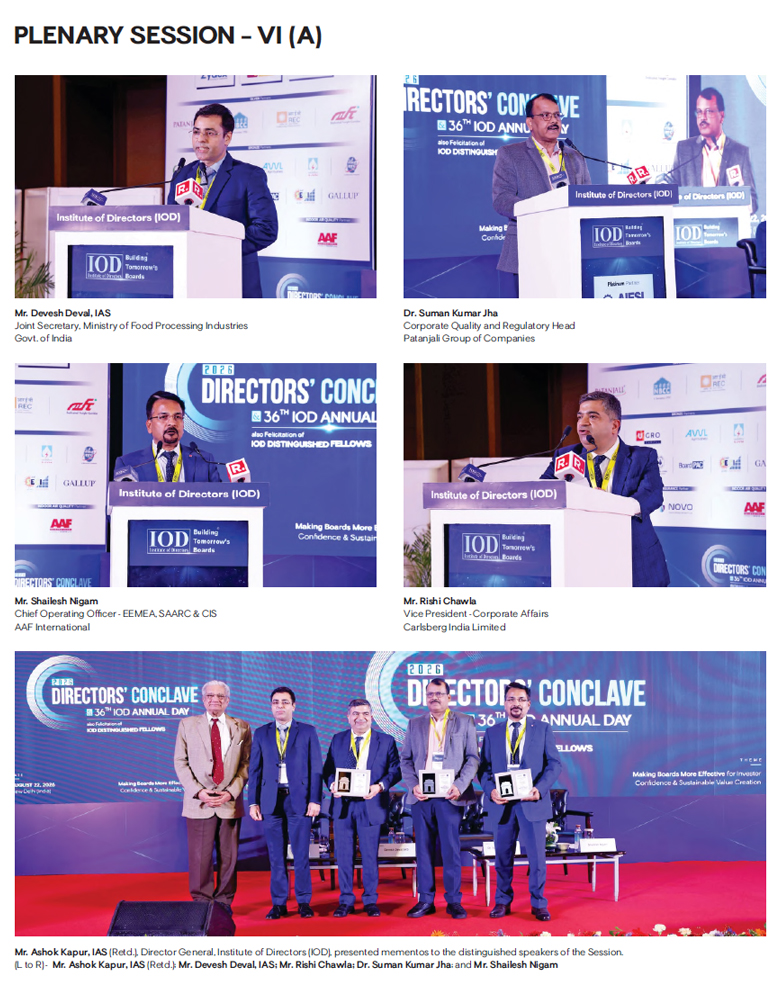
The session was followed by an engaging interaction with the large audience.
PLENARY SESSION – VI (B)
SPECIAL SESSION
Topic 1: Driving Trade and Investment through the UK – India Free Trade Agreement (FTA)
The Distinguished Speaker of the Session was:
Ms. Jaya Choraria
Deputy Trade Commissioner for South Asia
British High Commission, New Delhi
Ms. Choraria offered an international perspective on sustainable value creation, highlighting the recent landmark UK-India economic partnership through the Comprehensive Economic and Trade Agreement (CETA). She observed that the agreement marks a significant evolution in bilateral trade, creating greater certainty, reducing barriers and enabling businesses across both economies to expand their international footprint. She highlighted the opportunities for Indian exporters through expanded duty-free access to the UK, alongside improved market access for British goods, services, technology and professional expertise in India. Beyond tariff reductions, she noted that streamlined customs procedures, stronger intellectual property protections, professional mobility and greater regulatory transparency could facilitate deeper integration of supply chains and “cross border business”. Ms. Choraria further emphasised the investment dimension of the relationship, pointing to the growing presence of Indian businesses in the UK and British companies in India. She argued that CETA should be viewed not as an endpoint, but as a platform for joint-investment, innovation and long-term partnerships. Looking ahead, she underscored the importance of strengthening collaboration across sectors to build a more resilient and future focused UK-India partnership.
Topic 2: IRCTC – Building India's Digital Rail Travel Ecosystem
The Distinguished Speaker of the Session was:
Mr. Rahul Himalian, IRTS
Chairman & Managing Director
Indian Railway Catering and Tourism Corporation Limited (IRCTC)
Mr. Himalian reflected on the evolving role of organisations in creating meaningful value, emphasising that excellence begins with a willingness to remain a learner. Drawing on the ethos of IRCTC, he identified customer centricity as the organisation's defining principle, underpinned by an engaged workforce and a culture of service. He traced IRCTC's evolution and noted that it has been driven by technology and innovation, with AI increasingly embedded across ticketing, customer service, multilingual communication, demand management and operational processes. Digital platforms such as the 139 service further demonstrate how technology can improve accessibility and responsiveness at scale. Mr. Himalian also highlighted IRCTC's expanding tourism portfolio, from luxury trains and pilgrimage circuits, positioning rail tourism as a vehicle for showcasing India's cultural and geographic diversity. He concluded by emphasising that institutional impact lies not merely in delivering services, but in continuously reimagining them to create distinctive experiences, strengthen public trust and advance India's tourism and digital infrastructure.
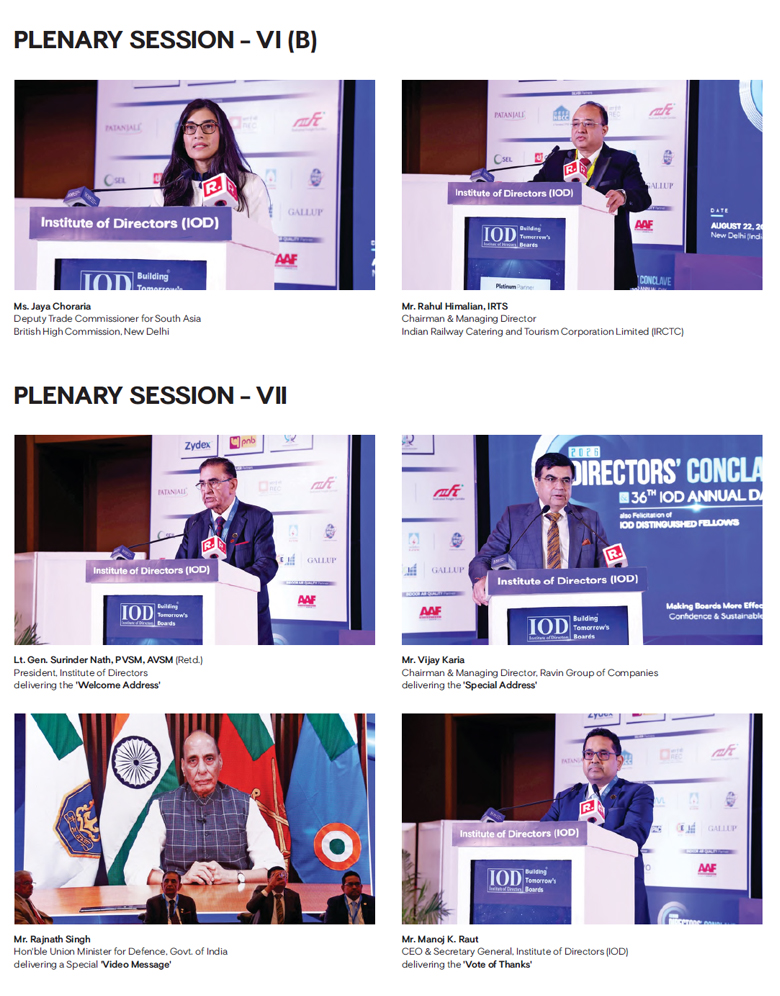
This was followed by a Networking Reception for all the Guests, including speakers and delegates.
PLENARY SESSION – VII
36th IOD ANNUAL DAY CEREMONY
The 'Welcome Address' of the session was delivered by:
Lt. Gen. Surinder Nath, PVSM, AVSM (Retd.)
President
Institute of Directors (IOD)
Gen. Nath welcomed distinguished guests to the evening session of the Annual Directors' Conclave 2026, describing the occasion as a significant moment for IOD as it honoured the Distinguished Fellows 2026. He emphasised that the Distinguished Fellowship represents more than recognition; it celebrates leadership anchored in integrity, responsibility, vision and meaningful contribution to business, governance, public life and society. Congratulating the IOD Distinguished Fellows who were to be felicitated later that evening, he described their leadership as an embodiment of the ethical leadership, responsible governance and institutional excellence that IOD always seeks to promote. He also emphasised the value of bringing diverse perspectives together to build a stronger and more inclusive leadership ecosystem for India.
The 'Special Address' of the session was delivered by:
Mr. Vijay Karia
Chairman & Managing Director
Ravin Group of Companies
Mr. Karia emphasised that the fundamental responsibility of a board extends beyond protecting present shareholder value to creating the conditions for enduring institutional health and long-term value creation. He stressed that directors are some kind of trustees of capital rather than its owners, and therefore must approach capital allocation, risk and sustainability through a long-term strategic lens. Effective boards, he added, should move beyond monitoring financial performance and compliance towards actively shaping strategy, strengthening organisational capability and ensuring that boardroom priorities translate into meaningful action across the organisation. Drawing on examples of long-term infrastructure and investment planning, Mr. Karia underscored the importance of strategic thinking that anticipates future economic and geopolitical realities. He further highlighted the board's responsibility to cultivate leadership at every level, build an ownership mindset and ensure that sustainability is embedded in business decisions rather than treated as a reporting obligation. He concluded by urging directors to view stewardship as a responsibility not merely to the company, but to society, the nation and future generations.
The IOD's 36th Annual Day Ceremony featured a Special Video Message from:
Mr. Rajnath Singh
Hon'ble Union Minister for Defence
Govt. of India
Mr. Singh noted IOD's significant contribution to strengthening boardroom standards and fostering ethical, transparent and accountable leadership in corporate India. Geopolitical uncertainties, rapid technological advancements, climate change, rising stakeholder expectations and uncertain global supply chains, he noted, were redefining the business landscape. In such an environment, boards must move beyond traditional oversight to becoming strategic leaders capable of anticipating risks, driving innovation, strengthening resilience and creating long-term value. He stressed that sustainability must remain central to board functioning, noting that strong corporate governance is no longer merely a regulatory requirement but a strategic imperative. Effective boards, he said, inspire investor confidence, reinforce organisational integrity, uphold transparency and enable sustainable growth. Highlighting India's economic trajectory and the reforms supporting the vision of 'Viksit Bharat 2047' and 'Atmanirbhar Bharat,' Mr. Singh emphasised the corporate sector's vital role in the national endeavour. Boards, he urged, must champion innovation, promote responsible business conduct, strengthen governance standards and ensure that growth remains inclusive, resilient and sustainable. They must also embrace emerging technologies, foster diversity of thought and nurture a culture of integrity and trust. He expressed confidence that the IOD conclave would facilitate meaningful dialogue among board leaders, policymakers, regulators and governance professionals, generating practical insights for building future-ready boards and strengthening India's corporate governance ecosystem on the global stage.
This was followed by:
Felicitation of IOD Distinguished Fellows – 2026 & Acceptance Remarks
1. Mr. K. Moses Chalai, IAS
Secretary, Department of Public Enterprises (DPE) Ministry of Finance, Govt. of India
2. Mr. Praveen Pardeshi
Chief Economic Advisor to Hon. CM Maharashtra & Chief Executive Officer
Maharashtra Institution for Transformation (MITRA)
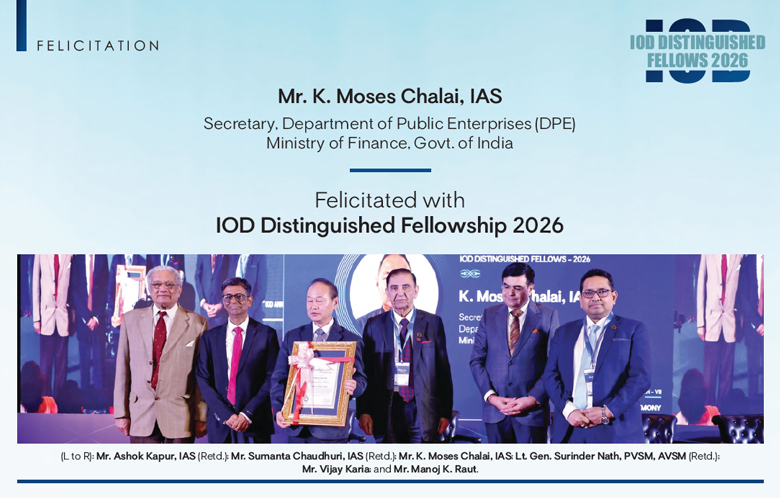
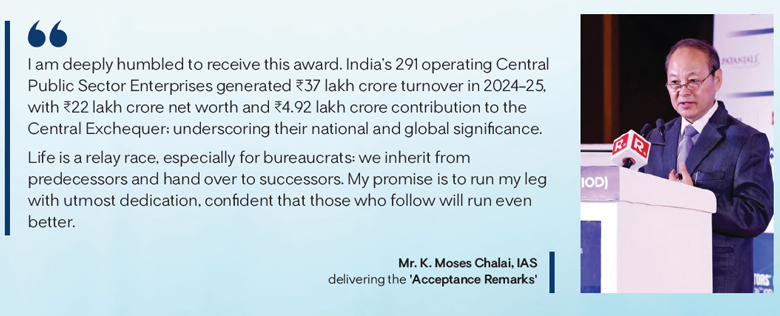
Mr. K. Moses Chalai, IAS is a 1990-batch Indian Administrative Service officer of the Manipur cadre, with over three decades of distinguished experience in public administration, policy, infrastructure development, social welfare, and inter-governmental coordination.
He has held several senior positions in the Government of Manipur and Government of India and was empanelled as Secretary to the Government of India in 2021. He currently serves as Secretary, Department of Public Enterprises, Ministry of Finance. Earlier, he served as Secretary, Inter State Council Secretariat, and Ministry of Home Affairs. From 2019 to 2024, Mr. Chalai served as Secretary, North Eastern Council, Ministry of DoNER. He also promoted technology-led development through initiatives involving 5G applications, 3D printing and entrepreneurship opportunities, and initiated the NEC/NER Vision 2047 document. His earlier assignments include senior positions in the Ministry of Women and Child Development, where he worked on Beti Bachao Beti Padhao and gender budgeting, and Principal Secretary/Secretary roles in Manipur covering health, higher education, horticulture, cooperation and social welfare. He also spent five years with the NERCORMP, a successful livelihood and community development initiative supported by NEC, DoNER and IFAD.
The Institute of Directors (IOD) is delighted to felicitate Mr. K. Moses Chalai, IAS for his outstanding contribution to public sector growth in India, leadership, infrastructure development, institutional coordination, and national capacity building.
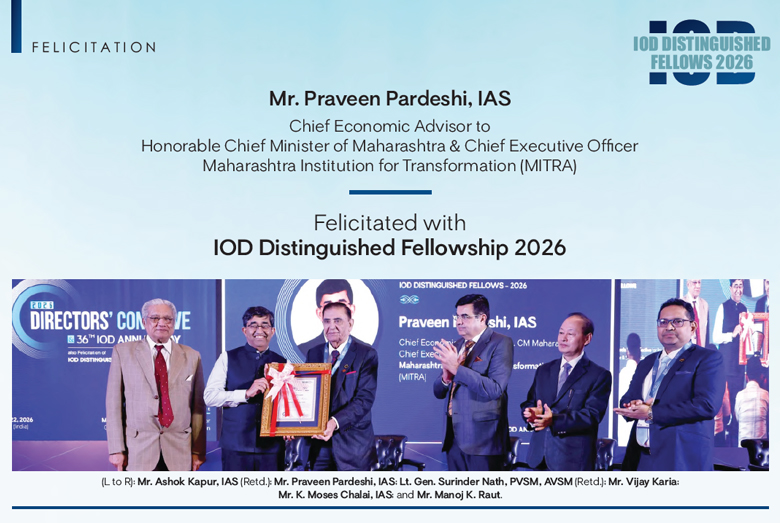
Mr. Praveen Pardeshi, IAS is a 1985-batch Indian Administrative Service officer of the Maharashtra cadre, with over 34 years of distinguished experience in public administration, governance, policy, and institutional transformation. He currently serves as Chief Economic Advisor to the Chief Minister of Maharashtra and Chief Executive Officer of the Maharashtra Institution for Transformation (MITRA), a state think tank modelled on NITI Aayog, since July 2023. During his career, Mr. Pardeshi has held several senior positions, including Additional Secretary to the Chief Minister of Maharashtra, Principal Secretary of Revenue and Forests, and Municipal Commissioner of Greater Mumbai. He also served as Member (Administration) of the Capacity Building Commission, Government of India. His international experience includes senior leadership roles with the United Nations, including UNDP Geneva and the United Nations International Strategy for Disaster Reduction (UNISDR). As District Collector and District Magistrate of Latur, he led relief and reconstruction efforts following the 1993 Killari earthquake.
The Institute of Directors (IOD) is delighted to felicitate Mr. Praveen Pardeshi, IAS for his exceptional leadership and distinguished service in public administration, governance, economic policy, and institutional transformation.

The 'Vote of Thanks' was delivered by:
Mr. Manoj K. Raut
CEO & Secretary General
Institute of Directors (IOD)
Mr. Raut reflected on the day's discourse as an opportunity to reaffirm the Institute's enduring mission of building stronger boards to build stronger institutions and, ultimately, a stronger India. He expressed appreciation to IOD President Gen. Surinder Nath for his leadership, and to Mr Vijay Karia for his longstanding support and contribution to IOD's growth. He also acknowledged the special video message from Hon'ble Mr. Rajnath Singh, Union Minister of Defence, and extended congratulations to the newly inducted IOD Distinguished Fellows 2026, Mr. K. Moses Chalai, IAS, and Mr. Praveen Pardeshi, IAS for their distinguished contributions to public service and leadership. Emphasising that the IOD Distinguished Fellowship represents responsibility as much as achievement, he noted that the board of tomorrow cannot remain a board of yesterday. He thanked the Governing Council, National Advisory Council, Fellows, members, partners, speakers and delegates for strengthening IOD as a vibrant national and global boardroom community. He finally concluded by reaffirming IOD's ambition to become more relevant, impactful and global, while encouraging members to carry forward the evening's conversations and connections.
The Institute of Directors (IOD), India would like to place on records its sincere gratitude for the unwavering support and encouragement extended by all its Partners & Sponsors.
Our PLATINUM Partners:
1. Central Depository Services Limited (CDSL)
2. AI Engineering Services Limited (AIESL)
1. Bisleri International
2. Carlsberg India
3. Punjab National Bank (PNB)
4. Zydex Industries Pvt. Ltd.
5. Indian Railway Catering & Tourism Corporation (IRCTC)
6. The Ravin Group, India
7. Gorakhpur Industrial Development Authority (GIDA)
Our SILVER Partners:
1. Patanjali Ltd.
2. Rural Electrification Corporation Limited (REC)
3. Dedicated Freight Corridor (DFC)
4. National Building Construction Corporation Limited (NBCC)
Our BRONZE Partners:
1. SEIL Energy
2. Gallup
3. BoardPAC
4. UGRO Capital
5. AWL Agri Business Limited
6. Coal India Limited
7. Solar Energy Corporation India Limited (SECI)
8. Power Finance Corporation Ltd.
9. Satluj Jal Vidyut Nigam (SJVN)
10. Ircon International
11. Steel Authority of India Limited (SAIL)
12. The Diplomatic Club of India
Our INSURANCE Partner:
1. NOVO Insurance
Our INDOOR AIR QUALITY Partner:
1. American Air Filter International
(a member of Daikin Group)
Our MEDIA Partner:
1. Republic Media Network
The Republic Media Network and Doordarshan covered the Annual Directors' Conclave and subsequently broadcast the proceedings, extending the reach of the event and its boardroom deliberations to a wider audience.
This report has been compiled by:
Mr. Ashok Kapur, IAS (Retd.)
Director-General
Institute of Directors (IOD)
&
Ms. Violina Das
Assistant Editor – Director Today, and Assistant Manager, Communications Institute of Directors (IOD)

Bringing a Silent Revolution through the Boardroom
Institute of Directors (IOD) is an apex national association of Corporate Directors under the India's 'Societies Registration Act XXI of 1860'. Currently it is associated with over 31,000 senior executives from Govt, PSU and Private organizations of India and abroad.
Owned by: Institute of Directors, India
Disclaimer: The opinions expressed in the articles/ stories are the personal opinions of the author. IOD/ Editor is not responsible for the accuracy, completeness, suitability, or validity of any information in those articles. The information, facts or opinions expressed in the articles/ speeches do not reflect the views of IOD/ Editor and IOD/ Editor does not assume any responsibility or liability for the same.

Oct 15, 2026
Independent Directors (IDs) should complement executive colleagues who wrestle with day-to-day issues that burn up time needed for the independent thought expected of company directors. IDs and executive directors should understand each other's roles and how their respective contributions can be complementary.
Read more
Oct 15, 2026
The October 2026 issue of Director Today, themed “What Truly Gets You the Board Seat: Equipping IDs for the Future Boardrooms,” addresses a question that every aspiring and serving Independent Director (ID) must answer squarely, “What does it take to earn a seat in an Indian boardroom, and what does it take to keep it?”
Read more
Sep 24, 2026
Today when the AI and its innovative tools are fast emerging as drivers of not only operational excellence but are significantly helping in strategic decisions and in building competitive advantage, leadership roles in the entire context of corporate governance are required to be revisited and transformed.
Read more
Sep 07, 2026
AI is the biggest riser in this year's annual survey. It jumps from tenth to second place after cyber issues, highlighting the emerging risks for companies in almost all industry sectors. Confronting cyber and AI risks and threats is a strategic issue for corporate boards and an operational concern for business executives.
Read more
Sep 07, 2026
As corporates race toward the September 30 deadline, we are yet to see whether the needle has moved from frantic box-ticking to real accountability, something our new generation of emotionally conscious citizens and environment activists will also demand & perhaps approve.
Read more
Aug 12, 2026
Human, eco-system and planetary health are inter-related. Pollution of the environment, biodiversity loss and climate change are also important drivers of the emergence and spread of disease. Life forms adapt in differing ways and at varying speeds. We can learn from species with whom we have a common ancestry.
Read more
Aug 12, 2026
Climate change has emerged as one of the defining governance challenges of our time. Increasingly frequent extreme weather events, disruptions to supply chains, resource scarcity, and evolving stakeholder expectations are reshaping the global business landscape.
Read more
Jul 07, 2026
Health insurance literacy in India is facing a significant challenge. It is not merely a rural issue. It is an urban issue, a professional issue, and perhaps most importantly, a women's issue. Until we recognise the problem clearly, we risk designing solutions for the wrong diagnosis.
Read more
Jul 07, 2026
What I found when I arrived was this: there was a very simplified Board framework at SBIML with only one Committee viz ECOD (Executive Committee of Directors). No Audit Committee. No Nomination and Remuneration Committee. No Risk Management Committee.
Read more
Jun 12, 2026
Investigations of insolvencies can reveal deficiencies in the attention given to basics such as monitoring cash flows and critical trends or anticipating pressure points on the ability to meet financial commitments as they fall due.
Read more
Oct 31, 2025
Aug 08, 2025

Aug 08, 2025
Aug 08, 2025

Aug 08, 2025

Aug 08, 2025
Aug 08, 2025
Jul 18, 2025

Feb 06, 2025

Nov 09, 2024

Jun 01, 2024

Mar 05, 2024